
Safe Journeys: The Complete Guide to Travelling by Car with Your Pet
Summer holidays are here, and if you’ve got a dog or a cat who thinks they run the house, chances are you’ve already had the conversation about whether they’re coming with you. It sounds simple until you actually think it through: the right restraint, stopping points, keeping them cool, what to do if they’re not great in the car.
Whether you’re heading to Cornwall for a week or making a day trip somewhere closer to home, dog car safety in the UK comes with real legal requirements and a few things that catch even experienced pet owners off guard.
Here’s everything you need for travelling with pets by car: the law, the right restraint, car sickness, temperature risks, long-journey planning, and whether your pet would genuinely rather stay behind.
Already thinking about leaving your pet in safe hands this summer?
Explore boarding at Hunters Lodge
What UK Law Says About Pets in Cars
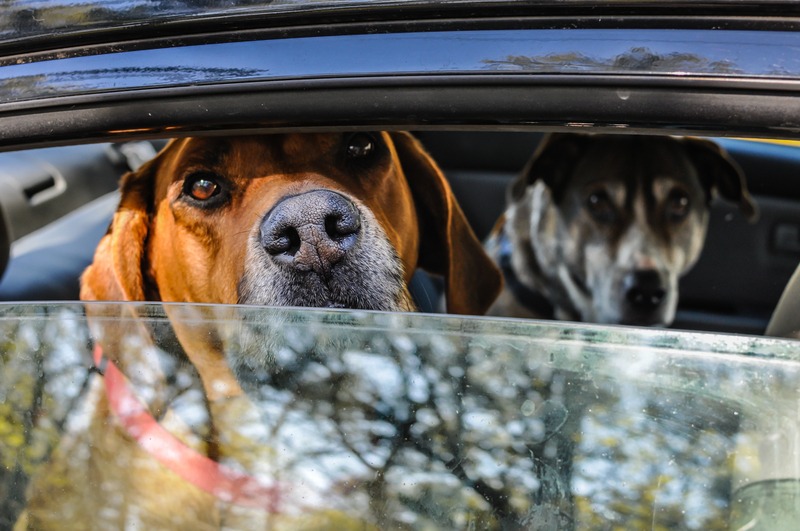
Let’s start here, because a lot of people don’t realise this is actually a legal matter.
Highway Code Rule 57 dogs
The rule states that animals must be suitably restrained when travelling in a vehicle; they cannot distract the driver or cause injury if the vehicle stops suddenly. A dog roaming freely in the back, or sitting on your lap, does not meet that standard.
If police stop you with an unrestrained pet, you could be charged with driving without due care and attention, a fine of up to £5,000 and potential points on your licence. Your car insurance may also be invalidated if you’re in an accident while your dog isn’t properly secured.
The rules around leaving a dog in a car in the UK are equally clear. Never leave your pet unattended in a parked vehicle in warm weather. Temperatures can reach dangerous levels within minutes, even on days that don’t feel especially hot.
Rule 57 at a glance
- Pets must be ‘suitably restrained’ at all times in the vehicle
- Unrestrained pet = potential careless driving charge + fine up to £5,000
- Car insurance may be invalidated in an accident if your pet is unrestrained
- Dogs must be microchipped and wear an ID tag whenever they leave the home
Crates, Harnesses, and Guards – Which Is Actually Safest?
There are four main options when it comes to restraining your dog in the car, and not all of them offer the same protection. Here’s an honest breakdown
| Restraint | Safety | Best For | Notes |
| Boot crate (secured) | 5/5 | Larger dogs; frequent travellers | Most secure; dog has space to settle |
| Dog guard | 4/5 | Hatchbacks/estates; multiple dogs | Freedom of boot; less secure at the door opening |
| Pet carrier (seatbelted) | 4/5 | Small dogs and cats | Portable; must be seatbelted in |
| Crash-tested harness | 3/5 | Short trips; all sizes | Must be crash-tested; limits movement |
When it comes to a dog car harness in the UK, the market is full of options at every price point, but not all have been crash-tested. A harness that hasn’t been independently tested to FIA or equivalent standards may seem fine on a normal journey, but offer little real protection in a collision. Always check before you buy.
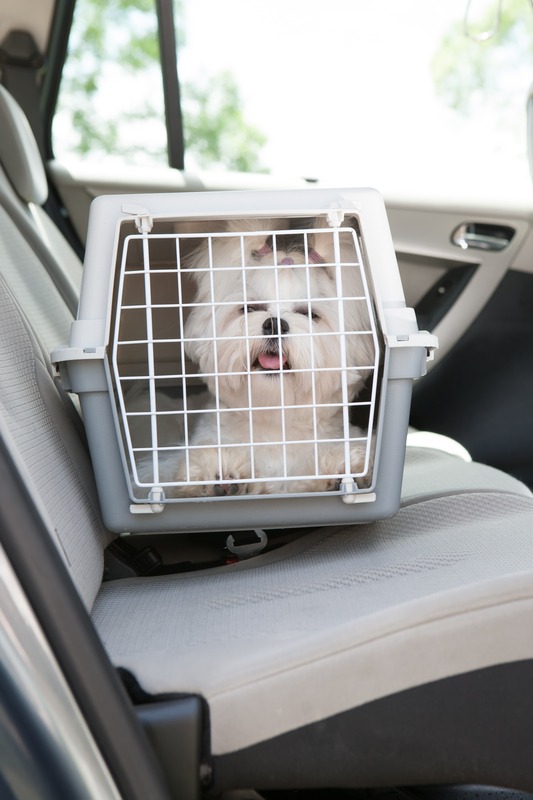
A dog travel crate secured in the car boot is widely considered the gold standard, particularly for larger breeds or dogs who travel regularly.
It gives your dog space to settle, prevents distraction, and, properly secured, won’t become a projectile in a sudden stop. When lining it with familiar bedding, for anxious dogs, a worn item of clothing in the crate helps more than most people expect.
For cats, a rigid hard-sided carrier is the only appropriate option, seatbelted securely on the back seat so it can’t travel forward in a sudden stop.
How to Stop Your Dog Getting Car Sick
Car sickness in dogs is more common than most people expect. Some dogs suffer genuine motion sickness; their inner ear hasn’t adapted to moving at speed. Others get anxious in the car, and the nausea follows from the stress.
Either way, it results in excessive drooling, yawning, whining, restlessness, and vomiting.
If you’re seeing these signs on every trip, speak to your vet. Some medications work well, and a vet can help you work out whether the issue is physical or behavioural.
How to prevent dog car sickness
- Don’t feed your dog in the two hours before a car journey. A full stomach makes motion sickness significantly worse.
- Keep the car well-ventilated. Crack the windows or use the blower on fresh air rather than recirculating.
- Dogs facing forward tend to cope better. A crate in the boot facing the direction of travel is usually the most comfortable option.
- Short, enjoyable trips, a park, a field, somewhere they like, help shift the vet-only car association over time.
- For dogs that do get stressed in cars, familiar bedding or a worn piece of your clothing in the crate can make a real difference.
Do dogs get stressed in cars?
Some genuinely do, and that’s worth paying attention to.
Our doggy day care team in Northamptonshire looks after every dog as an individual.
Never Leave Your Pet Alone in a Hot Car
Dog overheating in cars is one of the most preventable causes of pet death in the UK each summer, and it happens faster than most people expect.
A car parked in direct sunlight on a 22°C day can reach 47°C inside within an hour. Dogs can’t regulate their temperature the way humans do, and heatstroke can set in within 15 minutes.
Never leave your dog alone in a parked car when it’s warm. Not even for a quick coffee, not while you pop into a shop, and not on overcast days either, interior temperatures can climb significantly even when it doesn’t feel hot outside.
Hot car warning
- A 22°C day can produce 47°C inside a parked car within an hour
- Heatstroke can set in within 15 minutes in a hot vehicle
- Signs: heavy panting, excessive drooling, weakness, glazed eyes
- Dog in distress in a locked car? Call 999 immediately
Worried about keeping your pet cool on a long summer journey?
Our kennels and VIP dog rooms are climate-controlled and staffed all day.
Planning a Long Car Journey with Your Dog
On any long car journey with your dog, the rule of thumb is to stop every two hours, not just for their bladder, but to give them a chance to stretch, drink water, and settle again. A dog lying in a crate for four hours without a break is not comfortable, even if they look it.
A few things that make a real practical difference:
- Always put the lead on before opening the car door. At a motorway service station or unfamiliar layby, a dog can bolt towards traffic in seconds.
- Carry a non-spill water bowl and plenty of fresh water. Dogs dehydrate quickly in warm conditions, especially if they’re anxious.
- Bring familiar bedding or a favourite toy. The scent of something known helps dogs settle in unfamiliar surroundings.
- Pack your dog’s usual food for any long trip. Breakdowns and delays happen; you don’t want to be hunting for a pet shop in an unfamiliar area.
- A basic pet first-aid kit is worth having in the car for any journey of significant length.
Quick tip
Give your dog a good walk and a toilet break before you set off. A dog that’s already exercised and empty will settle into the journey far more calmly than one that’s been waiting inside all morning.
Helping Your Dog and Cat Actually Enjoy the Journey
For dogs who find the car difficult, the most effective thing you can do is change what the car means to them. Most dogs that do get stressed in cars have only ever used them for vet visits, hence the association is built on something unpleasant. Changing it takes time, but it’s achievable.
Start small. sit with them in the stationary car, engine off, and give a treat. Then the engine is on. Then a short drive somewhere genuinely good, a walk, a park, a field they enjoy. Adult dogs can absolutely learn to associate the car with something positive; it just takes more repetition than starting from puppyhood.
For dogs who find passing traffic visually overwhelming, covering the sides of the crate helps considerably. Many dogs that wouldn’t previously settle will sleep for most of a journey without the visual stimulus of passing vehicles.
Cat car travel in the UK is a different challenge. Most cats find any car journey genuinely stressful and, unlike dogs, they rarely habituate to it. A rigid carrier, seatbelted on the back seat and lined with familiar bedding, is the best approach.
Keep the journey quiet and smooth, avoid loud music, and speak calmly if your cat vocalises. For cats with severe anxiety, speak to your vet beforehand; there are safe options available.
Sometimes Staying Is the Kindest Choice
Not every pet can travel by car. Some dogs find long journeys genuinely distressing, however carefully the trip is planned. Most cats would honestly rather stay somewhere calm and familiar than spend hours in a carrier. And on a hot summer trip, the logistics of keeping a pet safe and comfortable can add real stress to what is supposed to be a relaxing holiday.
Choosing to leave your pet in good hands isn’t a compromise. For many pets, it’s the better option.
At Hunters Lodge, we’ve been caring for pets from across Northamptonshire and Milton Keynes for over 40 years. We’re a family-run business on 20 acres of peaceful countryside, and we understand that leaving your pet only feels right when you genuinely trust where they’re going.
Video embed – 9 July 2019
What we offer this summer:
- Dog Boarding Kennels: (Northampton and Milton Keynes) Spacious heated kennels with individual outdoor runs, up to 6 dogs from the same family sharing, and 20 luxury kennels with underfloor heating for older or short-coated breeds.
- Doggy Day Care Northampton: 9.5 acres of fully secure paddocks, Scandinavian log cabins for rest and socialisation, and individual or group playtime with our staff.
- VIP Dog Rooms: Our newest option for dogs who deserve something extra. Limited availability, book early for summer.
- The Cattery: Spacious chalet-style rooms with thermostatically heated beds, private gardens, and one-to-one daily attention. Ideal for cats who prefer things on their own terms.
Our team can administer medication at no extra charge and cater for special diets. We’re licensed by South Northants Council and welcome new customers for a look around Monday to Saturday between 11 am and 11:45 am, no appointment needed. July and August fill up fast, so it’s worth getting in touch early if you’re planning a summer trip.
Take a closer look at our facilities by exploring our gallery, where you can view our spacious daycare areas, kennels, and play spaces. Visit our website for photos, videos, and virtual tours.
If you’d like to know more about any of our services, our team are always happy to help. Get in touch at 01604 870330 or to send us a message. We’re here to answer any questions about car travel safety, boarding, or anything else about keeping your pets safe and happy.
Frequently Asked Questions About Travelling with Pets by Car
What is the safest way for a dog to travel in a car?
A crate secured in the boot is widely considered the safest option. It gives your dog a contained space to settle, keeps them from becoming a projectile in a sudden stop, and prevents them from distracting the driver. Line it with familiar bedding and ensure it’s properly fixed so it can’t shift on corners or under braking.
How do I stop my dog from getting car sick?
Avoid feeding your dog for at least two hours before travel. Keep the car well-ventilated with fresh air. Position your dog facing forward where possible; a rear-facing crate often makes motion sickness worse. Build up gradually with short, positive journeys to places they enjoy. If sickness persists on every trip, speak to your vet, as there are medications that can help significantly.
How often should I stop on a long car journey with a dog?
Every two hours, as a general rule, or sooner if your dog shows signs of distress. Each stop should give them a chance to stretch, relieve themselves, and have a drink of water. Always put the lead on before opening the car door, particularly at busy service stations or unfamiliar lay-bys.
Can cats travel in cars?
Yes, but most cats find car travel genuinely stressful and don’t adapt to it the way dogs can. For cat car travel in the UK, a rigid, hard-sided carrier is essential, seatbelted securely on the back seat. Line it with familiar bedding, keep the journey as smooth and quiet as possible, and speak to your vet beforehand if your cat is particularly anxious.
Should I travel with my pet or leave them in boarding?
It depends on the pet. Some dogs travel happily; others find journeys genuinely distressing. Most cats prefer to stay somewhere calm and familiar. On longer summer trips, the added logistics of temperature control, stops, and comfort can make boarding the more relaxed option, for you and for them.